Friday April 18, 2008
It was a low point for Bulldog athletics when women’s golf coach Todd McCorkle resigned last year over allegations of harrassment and inappropriate conduct.
“Resigned” actually meant “reassigned within the athletic department.” McCorkle wasn’t fired. There’s just one problem.
McCorkle now has a new title, administrative specialist-managerial.
He even has an office phone number listed on the University Web site. The problem is the number routes to current women’s golf coach Kelley Hester.
Nobody in the athletic department could provide The Red & Black with even a semblance of McCorkle’s job duties.
They didn’t know.
But apparently they know how to get him his paycheck which comes with a $94,000 price tag in this new “position.” Whether or not he was fairly or unfairly accused last year, that doesn’t excuse this sham of a post within the athletic department especially when he has been double-dipping “as an instructor at The Golf Club at North Hampton in Fernandina Beach, Fla. “
McCorkle’s contract with UGA will expire at the end of June, and he told the Red & Black, “I’m at a point in my life where I’m content with each of us going our separate ways.” I guess even his shame has its limits.
Friday April 18, 2008
Oy…
“Who elected these N.C.A.A. people?” (Neil Abercrombie, Democrat of Hawaii) said at a news conference Thursday on Capitol Hill while gripping a souvenir University of Hawaii football. “Who are they to decide who competes for the championship?”
We give the NCAA and even Miles Brand no shortage of grief, but even they will look downright enlightened next to these people. Any reasonably informed fan could tell Rep. Abercrombie that 1) the member schools “elected” the NCAA and 2) even so, the NCAA does not recognize a 1-A football champion and has nothing at all to do with the college football postseason or the BCS.
The BCS is a contractual arrangement between major conferences, bowls, and television networks, and it is through their grace that schools like Hawaii are even able to participate. Just take your check, say thank you, and resume irrelevance.
One wonders if Rep. Abercrombie in his zeal will go after March Madness where the NCAA actually does have something to do with deciding “who competes for a championship.” But you can kind of forgive him for his ignorance…it’s easy to get disconnected from the college sports mainstream in Hawaii. Rep. Lynn Westmoreland of Georgia has no such excuse. Shame on him for joining this circus.
Thursday April 17, 2008
They’re no inflatable couch, but these two items should be in your possession sometime this year:
Author Rob Suggs is writing a book named “Top Dawg: Mark Richt and the Revival of Georgia Football.” For the majority of you who know your way around the Bulldog message boards, telling you that this is SaxonDawg’s book should say everything. It’s going to be a good one. Despite Richt’s hesitancy that comes across in the ABH blurb, he is cooperating with the author, and it will be one of the first inside looks at the most recent chapter in Georgia football history.
You can pre-order the book on Amazon now.
Second, the Munson bobblehead that was in the news last week seems to be available now. You can find it over on the Anti-Orange page, at Bulldog Sporting Goods, or you can try your favorite Bulldog retailer. Remember that 100% of the royalties and proceeds goes to UGA Athletic Department’s Noah Harris Memorial Scholarship Fund.
Thursday April 17, 2008
20 Bulldog players will accompany Mark Richt to Honduras in May on a five-day mission trip. “Defensive end Rod Battle, offensive linemen Chris Davis and Ben Jones, punter Brian Mimbs and running back Richard Samuel are among players expected to make the trip,” according to the ABH.
Thank goodness the trip passes the compliance smell test. “It’s not like they’re going on some plush trip,” Richt said in the understatement of the year.
In other good works news, Bulldog signee Christian Robinson spent his spring break doing mission work in Africa for the second straight year. You might remember that he received his UGA offer while he was on last year’s trip. UGASports.com has a great (free) feature with Robinson about his 2008 trip.
Then there’s this. Hopefully this guy can get CBS:
“The cool thing about being a Georgia player was that I found a Dawg’s fan while we were visiting a church there, and he started gong nuts when he found out I was a future Dawg. So Georgia is an international team.”
Wednesday April 16, 2008
The Georgia Dome is in the midst of a $20 million maintenance and repair project that will include replacing the gawd-awful teal-and-plum color scheme with one much closer to our own hearts. The project, which also will have interior improvements and modifications, was already in the works before storm damage last month.
Glad to see them getting the building ready for an early-December Georgia game.

Wednesday April 16, 2008
Though Georgia has won eight consecutive SEC games, the Dawgs were a couple of innings away from going 3-3 over their last six games. The Bulldogs had to rally from an 8-1 deficit in order to beat East Tennessee State last night in Athens.
Georgia had risen to #7 in the nation thanks to their impressive SEC play to date, but losses last week to Winthrop and Georgia Tech had the team facing the possibility of its third straight nonconference loss before Tuesday night’s late-inning comeback win.
Though conference games are what it’s all about this time of year, midweek games can’t be overlooked. Not only do they give a team like Georgia the occasional chance to test themselves against regional powers like Clemson and Georgia Tech, they’re also an opportunity to develop pitching depth for the postseason. Most importantly, midweek games factor into the overall record which the NCAA can use when it comes time to determine postseason seeding and host sites.
With baseball talent as widespread as it is, even games against Kennesaw, Winthrop, and ETSU can’t be considered gimmes. Getting the win last night was big for this team, and keeping it going tonight against Georgia State is just as important before the team gets ready for a big SEC road trip to LSU and Florida.
UPDATE: Congratulations are in order for Gordan Beckham who was named Baseball America’s Midseason Player of the Year. He’s batting .438 with 16 HR and 40 RBI.
Wednesday April 16, 2008
Mustache Wednesday is Orson’s bag, but today’s it’s the end of a Georgia lip ornament that’s in the news.
Come watch Coach Felton shave off his mustache to make good on a promise to the UGA Student Section for winning the 2008 SEC Men’s Basketball Tournament.
The first 100 students receive free Domino’s Pizza and SEC Tournament Champion t-shirts. Coach Felton’s barber Vernell Wilson of Wilson’s Hair World will shave the mustache off this Friday, April 18 at Noon at the Tate Center Lawn.
Fans can also pick up the 2008 Georgia Men’s Basketball SEC Tournament Champion posters.
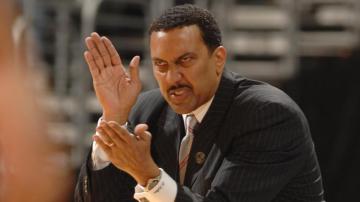
Just you try to take it off.
Tuesday April 15, 2008
We found out last season that the post-Florida celebration did a number on the Chapel bell and that more permanent repairs would have to be made. That time is now, and the bell is coming down for repairs. Both the bell assembly and the tower itself will get work; parts of the wooden tower are over 100 years old.
The bell should be back and ringable in time to celebrate a win in the season opener.
Monday April 14, 2008
The AJC is reporting that Georgia basketball has added a fifth and final member to its incoming 2008 freshman class. 6’4″ G Ebuka Anyaorah will sign with Georgia on Wednesday.
Anyaorah will join Travis Leslie as spring additions to a strong class that already included Howard Thompkins, Dustin Ware and Drazen Zlovaric.
You can’t blame Dennis Felton for looking at the short term, but the decision to take a full class of five this year will have an impact on Georgia’s strategy for the promising 2009 class. Unless there is further attrition (unfortunately a fact of life with Georgia basketball lately), Georgia will have a full load of 13 scholarship players next season.
With Billy Humphrey and Terrence Woodbury as the only rising scholarship seniors, the numbers tell us that there’s only room for two signees next year. PG DeMario Mayfield has already committed, so is there only room for one more commitment for 2009? And is that single scholarship reserved pending the decision of superstar PF Derrick Favors?
Monday April 14, 2008
Blame the lack of upsets or whatever else you like, but NCAA Tournament ratings were down from a year ago. It didn’t help that major conferences like the Big East, ACC, Big 10, and SEC all had their biggest programs sent home early (with the exception of UNC).
The national championship drew a 12.1 rating, down just 0.1 points from last year. Just for comparison’s sake, that was higher than any college football bowl game except the BCS championship game. I was surprised that nearly half of the football bowl games (16 of 33) drew a smaller audience than the 3.0 rating for the women’s basketball championship game.
Thursday April 10, 2008
The topic
of the NBA age limit has come up again, and it continues to puzzle me why
the league would want to restrain itself. I don’t know if age limits have really
been tested in court. Maurice Clarett was supposed to be the test case for the
NFL, and that challenge, um, kind of fizzled out. But let’s say they’re fine
and that it’s the NBA’s right to set whatever age limit they want. Why would
they?
Fortunately Dallas Mavericks owner Mark Cuban has
put his thoughts down to give us the first-hand perspective of an NBA owner.
He favors an age limit of 22, citing concerns over the maturity of younger players.
His concens make sense, but they still come off as "please protect us from
ourselves."
Why have NBA teams continued to draft high school players or, lately, one-and-dones?
There are only two reasons that make any sense: 1) they are better prospects
than older alternatives in the draft and 2) these are likely to be high-profile
players who can instantly sell tickets and merchandise and raise the profile
of the team. If the young players were a negative for the league, you’d think
that fewer would be drafted over time. Watch this year’s draft and
tell me if that’s the case.
I don’t buy Cuban’s line that a 22-year-old is more likely able to handle the
fame and fortune of the NBA. We’re talking about a lifestyle and sums of money
that are incomprehensible for almost all Americans. Being thrust into that situation
whether 18 or 22 or 42 is a life change that can’t be understood until you live
it.
Cuban replies to some comments by saying that "there are plenty of companies
that will only hire college graduates. Others will only hire Phds." True.
But those requirements have little if anything to do with maturity. For those
companies, a degree or doctorate is a way to establish that the applicant has
a minimal skill level or aptitude for the job. An NBA team’s scouting and player
evaluation takes care of that.
For the NCAA, this is a great deal. Their product is worth more when high-quality
players stick around whether it’s by the players’ own choice or through artifical
restraints on the job market. A few years riding the gravy train with someone
like LeBron James? Yes, please.
The NCAA gets to play the academic integrity card too, though it’s a small
point. A one-and done can breeze through a trivial fall semester and then blow
off his spring classes once the season is over. Someone who stays for two seasons
must at least pretend to be a serious student for a full academic year and then
some. College isn’t and shouldn’t be the NBA’s purgatory.
So we have a deal that’s great for the NCAA and seems to be a step in the right
direction for at least one NBA owner. Win-win all around, right? Sure, unless
you’re the talented 18-year-old who must go through the motions of pretending
to be a college student while taking the NCAA’s vow of poverty for two years
instead of working in your chosen profession.
I’d be OK with a system based on what baseball does. They’ve seemed to manage
fine without requiring a cup of coffee in college. If someone wants to come
out of high school, fine. Let them and the NBA teams take that risk. If a player
would rather head to college, require a minimum stay of three years to show
a commitment to education and allow the programs some shred of long-range planning.
Thursday April 10, 2008
Congratulations to Georgia’s Tasha Humphrey who
was selected by the Detroit Shock with the 11th overall pick in the first
round of Wednesday’s WNBA draft. She is Georgia’s eighth WNBA first-round selection;
only Tennessee and Connecticut have produced more.
It was a bit of a surprise and disappointment for local fans that the new Atlanta
expansion team passed
on Humphrey at the #8 pick, opting instead for Tamera Young of James Madison.
But Atlanta’s mistake is Humphrey’s gain. Instead of being part of an expansion
franchise, she finds herself on a contender. Detroit won the league title two
years ago and remains strong led by Deanna Nolan, another former Lady Bulldog
great. Detroit’s first pick at #4 was Alexis Hornbuckle of Tennessee. Besides
being outstanding players, Humphrey and Hornbuckle are both very smart on the
court with great awareness. It goes without saying that two decorated players
from Tennessee and Georgia should be assets in Detroit.
The situation is great for Tasha. She’s on a good team with a chance to win
a title as a rookie, she won’t be the only quality player drawing attention
from defenses, and she should relate to Detroit coach Bill Laimbeer’s style
easily. Yet another Lady Bulldog, Kara Braxton, is the liklely Detroit starter
at center.
I can’t let this post go without mentioning the #9 pick. Amber Holt of MTSU
originally signed
with Georgia, but she was "rejected
a week before the fall semester because course credits for her major weren’t
accepted." It’s an understatement to say that a player who was among the
most prolific scorers in the nation would have made a difference on a Georgia
team that struggled to produce offense. Insult was added to injury when Holt
helped to lead MTSU to an upset win at Georgia in December of 2006.
Tuesday April 8, 2008
Mississippi State guard Ben Hansbrough will transfer from Rick Stansbury’s program citing “the school’s lack of a practice facility” as his main reason for leaving.
Hansbrough’s story shows that the investment matters not only in recruiting and retention, but the absence of one can even hold back a player looking to develop and improve. We’ve shown before that Georgia’s new facility matches up with some of the best in the nation. It’s not often that Georgia basketball has had an advantage over its peers in much of anything when it comes to facilities, but that’s not the case anymore.
Tuesday April 8, 2008
Entering the tournament the conventional wisdom said that Memphis would be done in by free throw shooting. Through five games, they just got better and better from the line. But with the pressure of the lead in the national title game bearing down on them, the charity stripe did indeed prove fatal. The free throws were just symptomatic though. Memphis looked like a team unfamiliar with playing in big, close games, and free throws were just one of the mistakes they made down the stretch.
Congratulations to Kansas for not packing it in down by nine and fighting back to force overtime. A classic game all around, and the outcome shouldn’t make us overlook great performances on both sides.
|

 The easiest job at UGA
 Comments
 Dawg Media
 RSS 2.0