Wednesday May 13, 2009
The NCAA’s Double-A Zone has a roundup of articles from conference spring meetings, and the economy is naturally a common topic. The ACC dove right in:
“ESPN.com’s Heather Dinich wrote, “cost containment” is a pressing issue during the first day of meetings.”
The ACC discussed several cost-cutting measures including moving the ACC baseball tournament in 2010 from Boston’s Fenway Park to Greensboro, N.C. But the conference’s coaches and adminstrators aren’t so quick to scale back their annual beach trip spring meeting. The ACC spring meetings are being held at the Ritz-Carlton on Amelia Island, and any Dawg fan who’s made the trip to Jacksonville knows that the ACC reps aren’t exactly slumming it. That’s raised some eyebrows…
“I think they need to re-look at this Amelia Island [trip],” (N.C. State college of management department head Art Padilla) said.
That’s not to pick on the ACC…they have a multi-year commitment to the Ritz-Carlton, and I doubt we’ll see very many conferences scaling back to the point of booking meeting space at the local VFW.
Tuesday May 12, 2009
Mark Richt took a lot of heat last year over Georgia’s off-field discipline problems, but one thing we didn’t see was responsibility passed on down the chain of command. And you definitely didn’t see the University president calling out a position coach.
Tired of all the trouble that Florida State’s wide receivers are getting into, over and over and over and over again? Well, so too is Florida State President T.K. Wetherell. In a recent interview with the Tallahassee Democrat, Wetherell said it’s time for receivers coach Lawrence Dawsey to “step up” his efforts to control his players.
Jeez…and we think we have a meddling president. But more to the point, is Bobby Bowden actually responsible for anything at Florida State anymore other than seeing through an appeal to the NCAA in order to salvage his legacy?
Monday May 11, 2009
The suspensions of three football players were
reported last week by UGASports.com and confirmed
by the University over the weekend. The only surprise is that medical reasons
have ended Tony Wilson’s career.
For Figgins the suspension raises a question about the future of his career.
Despite his shoulder surgery he was still considered the favorite to enter the
season as the starting tight end. The depth chart will have to change as the
result of the suspension, and as many as four players will get a chance at the
position before Figgins is scheduled to return. Even before the suspensions
were announced Mark Richt told the Roswell Bulldog Club (and presumably other clubs
along the Road Tour) that both incoming tight ends (Lynch and Charles) would
likely see time as true freshmen.
So Figgins faces the challenge of using the second half of his junior season
just to battle back from behind and work his way through the depth chart. It
would leave him with only his senior season in which to try to play most or
all of the year as the starter. Of course that assumes he wins the job back,
and that’s not necessarily a given with the talent coming in. A redshirt season
in 2009 would allow him to rehab his shoulder completely and give him two full
years to play, though, again, he’d be facing a much more crowded depth chart.
The question whether to redshirt Figgins needn’t be answered now; you don’t
have to declare a redshirt before the fact. David Hale touches on the
issues facing the tight end position without Figgins, and we’ll have six
games to see whether those roles can be filled by others on the roster. If we
get to October and the position looks to be in good shape, Richt might address
the redshirt decision then. If the position looks shaky over the first six games
or if a blocking tight end fails to emerge, you’ll almost certainly see Figgins
return this year.
That leads to another question: would Figgins redshirting this season go against
the spirit of the suspension?
PS…I know there are those reading this who will say, "Why bother
to keep a repeat rules violator around any longer than necessary? He’s lucky
to even be on the team." It’s true that Figgins’ attitude and behavior
going forward will likely play into Richt’s decisions, but there’s also no need
to cast off a potentially valuable contributor without cause.
Friday May 8, 2009
Tim
Tucker interviewed Mark Richt in Columbus about a number of topics, but
most seem to be latching on to this one quote about the WLOCP:
“I don’t know what’s going to happen. But when people ask me the question,
‘Do you really think [Jacksonville] is a neutral site?’, I say, ‘No, it’s
not neutral.’ When you play in the state of Florida every year – we fly, they
drive; it’s hotter for us, it’s cooler for them. It’s played in a stadium
that [used to be called] the Gator Bowl. But what the heck? If nothing
else, we’ll make Jacksonville pay more to keep it there. . . . I wouldn’t
feel bad having a ‘neutral site’ game in Georgia – in the Georgia Dome.”
"It’s hotter for us, it’s cooler for them." Come again? Richt’s distaste
for the Jacksonville venue (current temperature: 85 degrees) isn’t anything
new, but I can only hope this was tongue-in-cheek.
The thing is that Georgia is so close to leveling off this series. If they
can pull off the win this year, they’ll be 3-3 over a six year period. That’s
not bad against a program with Florida’s recent success. With the exception
of last season, Georgia’s been right there in those games even in a year like
2006. To think that a mental block like this might be the edge in one of the
most important games of the year is becoming disconcerting.
Thursday May 7, 2009
Even though Mark Fox added Philip Pearson to the Georgia staff a month ago, there’s still been one vacancy on the Georgia bench.
According to the Roanoke Times, Fox has filled that vacancy with Virginia Tech assistant Stacey Palmore. The interesting part of the story is that Palmore didn’t pursue the job; Fox targeted him.
If you want to know why Fox picked Palmore, this quote from Virginia Tech head coach Seth Greenberg should do it: “Stacey Palmore has become one of the premier recruiters in the ACC.” Palmore, a native of South Carolina, becomes the staff’s second proven and experienced recruiter with strong ties to the southeast. He’s a 1993 graduate of Livingstone (N.C.) College.
In addition to being the top recruiter on the Va. Tech staff, Palmore was also responsible for coaching the post position. There’s no guarantee of course that he’ll have the same duties at Georgia. The Bulldog staff now looks like this:
Head Coach: Mark Fox
Assistant: Kwanza Johnson
Assistant: Philip Pearson
Assistant: Stacey Palmore
Palmore’s bio states that he coached at Western Carolina in 2000, but that was after the coaching change and shakeup that ended with Jonas and Jarvis Hayes transferring to Georgia. He’s been in Blacksburg since 2004, and it’s impressive that Fox was able to convince a stable and established assistant from an ACC school who wasn’t looking to leave to take a chance on a new guy just starting out in the SEC. But working in the talent-rich state of Georgia (not to mention the proximity to his hometown) has to be attractive to someone who’s made his mark as a recruiter.
Speaking of Palmore and recruiting the Atlanta area, there are also rumblings tonight that Virginia Tech wing Terrell Bell is looking at joining Palmore in Athens. Bell is a native of Stone Mountain, Ga. and was recruited by Palmore as part of the 2007 class. Georgia’s need at wing is immediate, but Bell would have to sit out a year. That might not be a bad thing, though – he’s only been a 2.1 PPG guy in two years with the Hokies.
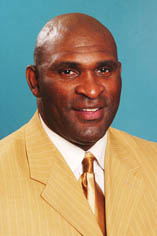
Stacey Palmore
Thursday May 7, 2009
You’ve got to hand it to Gary Stokan. It takes some incredible sales and persuasion
skills to get Georgia fans and administrators to even consider giving
up a home game to play a regular season neutral site game 90 minutes down
the road in Atlanta.
I can understand why schools like Alabama and Virginia Tech might like to play
in Atlanta. It’s a beachhead into some very good recruiting turf. It’s also
the only neutral site game of the season for those schools, so the impact to
the home schedule is more acceptable.
But Georgia? Why would a program give up a game at one of college football’s
top 10 venues in order to play just down the road at a smaller stadium with
a lesser game day experience? Why would we entertain the thought of playing
a game against a quality opponent in our own backyard while limiting the number
of fans and season ticket holders who would be able to attend and diluting our
home advantage? Why would we tell the Athens economy – heavily dependent on
the University and Georgia football – to stuff it while serving to line the
pockets of the Atlanta Sports Council and their Atlanta partners?
Recruiting? It’s not as if prospects from the state of Georgia are unaware
of the University of Georgia. Clearly any opponent would have more to gain on
the recruiting front. Again, it’s an issue of surrendering a big home field advantage.
At Sanford Stadium, Georgia could actually host recruits for such a big game
and use the occasion as an opportunity to sell the overall program and campus.
That’s not possible at the Dome where recruits would have to watch from the
stands or at home.
I also think the exposure angle is overblown. Instead of getting to show off
Sanford Stadium and Athens rocking for a big game, we’d be showcasing the Georgia
Dome and Atlanta. The same television coverage of a game at the Dome would be
there for a quality game in Athens.
This isn’t a strength-of-schedule question. Is it implied that Georgia couldn’t
otherwise attract a big opponent to play in Athens? I don’t buy it. If we can
find a big opponent, why wouldn’t we want every possible advantage to actually
win the game while showing off one of college football’s greatest settings?
Yes, a return trip would be in order. That’s how these things work, and, besides
– aren’t high-profile road games supposed to be good things for us these days?
Playing a tough opener is fine…just do it in Athens. If we’re going to play in the Dome, let it be in December.
I don’t blame Stokan. He’s looking out for his city and the people who pay
him. I’m just surprised that Georgia fans and especially those in charge of
the program would be so willing to line up to be used.
Thursday May 7, 2009
UGASports.com yesterday gave
a heads up that three players could be facing suspensions to begin the season.
The suspensions are of the dreaded "violation of team rules" variety,
so no arrests are involved. It’s still disappointing, especially for Houston
who was the one bright spot at defensive end since the end of last season. For
Figgins, it could prove to be a turning point in his career. He had already
missed time due to injury, and his chance to earn a starting role entering his
junior season will be affected by any suspension. White and Ros are more than
willing to step in, and Mark Richt has indicated that both incoming freshmen
tight ends might play this year.
By this point we shouldn’t be surprised when news of suspensions hits. It’s
amusing though that the reactions are usually as inevitable as the suspensions
themselves. They’ll go something like this:
- Righteous rage: Make an example of them! Bring down the hammer! Yank
the scholarship!
- Rationalization: Let he who never (had a drink / got a ticket / etc.)
in college cast the first stone. Boys will be boys.
- Myopia: How come this only happens at Georgia? We have such bad luck.
- Unhinged conspiracy: Adams and Evans make us play by an unfair set of
rules while Florida and Tennessee players could run over someone in the street
and play the next week.
This year we’ll probably see additional comments along these lines: so
much for all this leadership stuff we’ve been hearing about. Look – I’ve
asked as many questions as anyone about whether
things are really different this year, but even I don’t see a few discipline
cases as evidence of failing leadership or a rudderless program. It was unrealistic
to expect the program (any program, really) to go through the offseason with
zero incidents. They’re almost like injuries now – you know they’re coming,
and the only questions are how many, at which positions, and how severe?
Thursday May 7, 2009
Of course I’m pleased that Georgia
fared well in the current APR figures. With graduation set for this weekend
the APR release is a timely reminder of what’s most important to many of Georgia’s
student-athletes. But as schools nationwide release and compare their progress
rates, remember that the APR is a measure of academic progress and
not
necessarily of quality.
While I’m not claiming that Georgia (or anyone else) has an inflated APR because
their players are all basketweaving majors or that those with low APRs are all
struggling with astrophysics degrees, we also know that all majors and all universities
are
not the same. Progress towards any degree is better than no degree at all,
so congratulations are still in order for those, especially the student-athletes,
who are responsible for this good news.
We’ve discussed
before that academic progress can be another area where money matters. We
shouldn’t be surprised that just
a single BCS conference school, Ole Miss, is among those getting dinged
for a subpar football APR. Only two were penalized last year. Though the big
schools appear more often on the men’s basketball list, the schools most likely
to be penalized by the APR remain those smaller state schools who are less likely
to have the fleet of tutors or academic centers that keep student-athletes on
track.
The income disparity between the big programs and conferences and everyone else has been a hot topic lately for obvious reasons. The APR news is just one more data point. If you have the money to maintain a strong academic support system (and you place any kind of priority on academics), you probably did just fine on your APR numbers. It will be interesting to see on the heels of this news if some of the smaller conferences and schools begin to turn the BCS discussion from a debate about postseason structure to a more nuanced question of academics and socioeconomic opportunity.
Wednesday May 6, 2009
Blutarsky voices the concern that’s buried down deep in a lot of our subconscious
minds: Georgia is counting on a lot of injured players to come back healthy at key
positions.
It’s something
I’ve thought about too. We know that as many as three potential starting
offensive linemen missed spring. Sturdivant and Vance haven’t played period
since last fall. The starting five most seem to agree on has never been on the
field at the same time. Is this line suddenly going to materialize in three
months and be ready for a road opener against a Top 15 opponent?
It’s not just a problem for the offense. Jeff Owens hasn’t played a snap since
September. The defensive end position is even more unsettled than the offensive
line. Other than the emergence of Justin Houston during the spring, can anyone
even pretend to know anything about the rest of the group at this point?
When we talk about players like Sturdivant and Owens and their ability to change
the game, we’re talking about them at their dominating best. Yes, even at less
than 100% they can be very effective players. That’s not the same though as
the elite level of play that’s going to make the difference against Georgia’s
toughest opponents.
Of course the ability of the lines to play at their best impacts other positions.
On offense you have a new starting quarterback who still has no idea what kind
of protection he can expect. You also have a group of inexperienced tailbacks
who won’t know for several months where the best holes will come from. It’s
a similar impact on the defense. There will be two new starters in the secondary
with a lot of young depth behind them whose success and confidence will depend
on the ability of an unknown group of defensive linemen to get pressure.
I’ll put it this way: limiting the amount of practice time missed by linemen
this August might be the top key to success for this year’s team. Most everyone
should be cleared to play in plenty of time for preseason camp. If the lines
can get several weeks of consistent work together, they might be able to make
up a lot of the lost ground. But every day missed by even the most minor hamstring
injury or stinger or complications from last year’s injury will hurt Georgia
more than it would other teams because of the time already lost.
If we’re hearing things like "90%" and "probable" about
potential starting linemen in the weeks leading up to the season, it’s going
to be a big red flag. There isn’t time to rest and rehabilitate during the season,
and those problems that nag during August tend to linger on into the season.
The good news is that the reports are all positive at this point. Everyone
is ahead of or on schedule to return, and the players, Sturdivant and Owens
in particular, seem to understand the importance of getting back on time and
in shape. I don’t doubt the ability of coaches Searels, Garner, and Fabris or
the resolve of the players involved. As talented and committed as they are and for all the talk of leadership and attitude and intensity since last season,
everything’s still at the mercy of the human body and its limits.
Tuesday May 5, 2009
We detailed how recruiting has started to turn around for the Lady Dogs after a couple of slow years, and the program is already making an attempt to lock up one of the top sophomores in the state.
Erika Ford, an athletic 5’9″ sophomore guard from Chattahoochee High School in Alpharetta, has committed to Georgia for the class of 2011. She cannot sign a letter of intent until November 2010. Ford will be arriving just as the current incoming class of guards become upperclassmen.
Ford has already emerged as one of the top players in the state in any class. She was named 2nd team All-State as a sophomore in Georgia’s largest high school classification. She was also named player of the year in the competitive 7-AAAAA region. She also plays for the Georgia Elite U-16 team and was recently named the MVP of the Spring Break Classic Super Regionals tournament.
Commitments from high school underclassmen are nothing new in men’s basketball, but this is the first time I’ve seen it happen (certainly for the Georgia program) in the women’s game. Apparently Georgia saw her in a game where they were scouting someone else, and the process started from there.
Monday May 4, 2009
It’s not hard to sound
like the adult in the room next to people that equate a wildly successful
and growing sport with a disaster of an economic system, so John Swofford came
across pretty well last week.
There are many valid points and counterpoints when it comes to the playoff
discussion, and folks coming at the problem from any angle have to concede the
many tradeoffs that come with any postseason proposal. Swofford and others are
appearing on behalf of the BCS have put forward some very familiar (and valid)
defenses. The logistical concerns involved with a college football playoff
are, I think, very underrated.
But Swofford’s
concern that a playoff is a threat to the future of bowl games, though one
of the most-reported parts of his testimony, was probably also the weakest.
Sponsorships and TV revenue that now go to bowl games would
instead be spent on playoff games, "meaning that it will be very difficult
for any bowl, including the current BCS bowls, which are among the oldest
and most established in the game’s history, to survive," said BCS coordinator
John Swofford in prepared testimony. "Certainly the twenty-nine games
that are not part of the BCS would be in peril."
It’s not that a playoff wouldn’t impact the bowl landscape. It’s reasonable
to expect that. But would it really be the end of bowls as we know them? Even
if so, why should we care?
The BCS that Swofford defends is already a clear line of demarcation between
the haves and have-nots of college football. If you wanted to devise a system
that marginalized all but a select group of bowl games, you could hardly do
better than the BCS. "Old and established" bowl games such as the
Cotton and Citrus that as recently as 20 years ago played a role in deciding
the national championship are now afterthoughts. Even New Year’s Day, once the
sacred national holiday of college football and home of many of these traditional
bowls, has been trampled as the BCS stretches the season an extra week in order
to milk as much prime time as possible.
If Swofford’s reasoning is correct, why hasn’t all of the money and sponsorships
and TV interest shifted to that top tier of bowls, the BCS? To be certain, those
bowls have become very big money-makers. At the same time, other bowls continue
to flourish despite being relegated to exhibition status. New ones are added
almost every year so long as a sponsor and a time slot on ESPN can be found.
It’s surprising that some of college football’s most influential figures can
underestimate the demand that’s out there for the game.
No matter how much we romanticize them, bowls, at their most basic level, are
business arrangements between a host city and sponsor, a TV network, and the
teams playing in the game. If that arrangement works, the bowl succeeds. Even
games
that result in a financial loss for some of the parties aren’t necessarily
a failure. The imputed value of the exposure and the ability to say you played
in a bowl is worth something. Several bowls have survived and become annual
traditions. Others have failed (anyone remember the Cherry Bowl?) Others take
their place with all the tradition of a delivery pizza or a dot com. The process
carries all of the same nice warm, fuzzy charm as a stock exchange.
Swofford’s job is to protect the business interests of the BCS conferences
and their bowls and network partners, and that’s fine. Business is good. Congress
has to realize that there are real economic reasons why the BCS works, and there
will be much resistance to change from the key players who have a lot at stake.
Just don’t expect us to believe that the BCS is concerned with any bowls other
than the big five…we may be fools, but we’re not members of Congress.
Sunday May 3, 2009
Knowshon Moreno is going to wear #27 for the Denver Broncos…not just a random number for Denver fans or the family of the last Bronco to wear the number, Darrent Williams. We shouldn’t be surprised that Moreno handled the situation with great tact.
Thursday April 30, 2009
States like California, Texas, Florida, and Georgia are usually among the first mentioned when you’re talking about the places with the most concentrated football talent. But which state put the most players into the first round of the 2009 NFL Draft? Yep…tiny New Jersey.
- Eugene Monroe
- B.J. Raji
- Knowshon Moreno
- Malcolm Jenkins
- Brian Cushing
-
Donald Brown
- Kenny Britt
Texas was next with six first round picks. I don’t know if it’s more amazing that New Jersey had the most first round picks or that the states of Florida and Georgia didn’t manage a single first-round pick between them.
Rutgers football has had some of their best seasons (relatively speaking) over the past couple of years, and how much better would they have been keeping all of that Garden State talent at home? Schiano has a reputation for being able to recruit down in Florida, and it’s certainly worked to bring that program up from next to nothing, but we’ll see if the recent success of Rutgers can keep some local talent from crossing the Delaware. About a third of the first round picks came from the relatively small New Jersey-DC-Maryland-Virginia area, and tidbits like that can’t sit well with fans of certain mid-Atlantic region schools.
It’s also worth noting that only three first-round picks, all from California, came from hometowns west of Texas. At least as far as the first round was concerned, you could draw a line from Dallas to New York City and come within a couple hundred miles of most of this year’s top NFL picks.
Wednesday April 29, 2009
It was pretty much a formality. Courtney Kupets has won the 2009 Honda Award as the nation’s top collegiate gymnast. She was a finalist for the award as a freshman, won it as a sophomore, and was on her way to repeating last year before a season-ending injury. Teammate Katie Heenan kept the award at Georgia in 2008. Kupets joins Kim Arnold as Georgia’s only multiple Honda Award winners.
This award cements her place at the top of collegiate gymnastics, and she’s now eligible to be considered for the Collegiate Woman Athlete of the Year Award given later this spring. She’s deserving of that award as well; she’s already the most accomplished collegiate gymnast ever, and the case can be made for her place in the discussion of the best college athletes in any sport.

Photo: UGA Sports Communications
Wednesday April 29, 2009
Times are tough most everywhere, and even those overseeing high school sports in Florida are having to make some tough decisions.
The Florida High School Athletic Association’s board of directors voted to reduce varsity games by 20 percent and sub-varsity (JV and freshman) games by 40 percent the next two school years.
One varsity sport won’t be affected. We’ll let you guess which.
|

 Things are bad, but not THAT bad
 Comments
 Dawg Media
 RSS 2.0